Invisalign vs. Braces: Which Is Right for You?
May 19, 2026 9:00 amStraightening your teeth can sound simple until you start comparing the options. Invisalign looks appealing because the aligners are clear and removable. Braces have been used for decades and can handle a wide range of orthodontic concerns. Both can improve the way your teeth fit together, but they do not work the same way, and they do not fit every patient’s routine in the same way.
The right choice depends on more than appearance. It is also about your bite, how much tooth movement is needed, your habits, your comfort with wearing appliances, and how much responsibility you want day to day. The option that worked well for a friend may not be the best fit for your teeth or your routine.
At Caring Smiles Dental in Hoffman Estates, IL, Dr. Ankur Patel helps patients compare Invisalign and braces. The goal is to understand what each option can do, what the process looks like, and which one gives you the best chance of a healthy, confident result.
How Invisalign Works
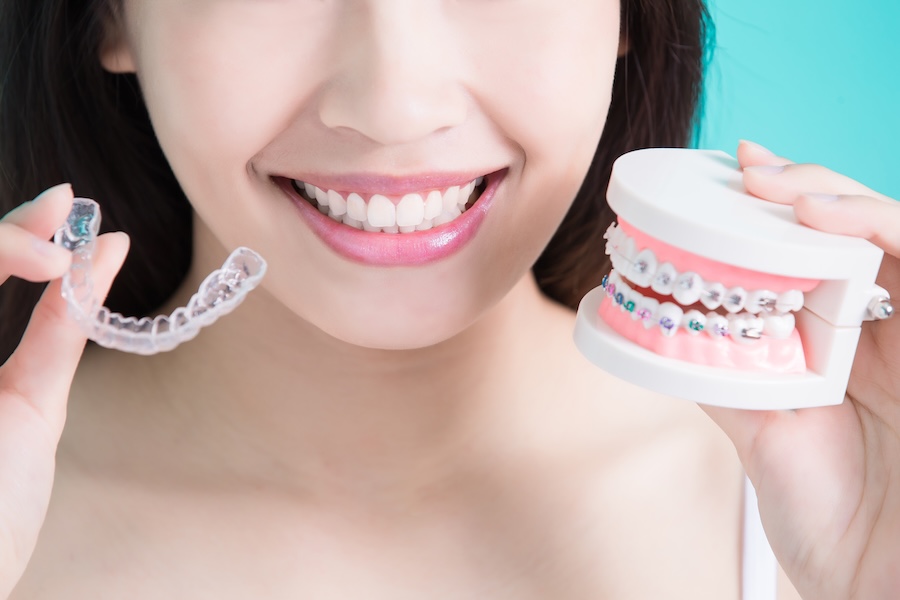
Invisalign uses a series of clear, removable aligners that gradually move the teeth. Each aligner is made to fit your teeth at a specific stage of treatment, and you switch to the next set as directed. Over time, those small movements help guide the teeth into better alignment.
The aligners are designed to be worn most of the day and night. They are removed for eating, drinking anything besides water, brushing, and flossing. This is one of the reasons many patients like Invisalign. There are no brackets or wires, and daily cleaning usually feels more familiar than cleaning around braces.
Invisalign can be a good option for many mild to moderate alignment concerns, including spacing, crowding, and certain bite issues. However, it does require consistency. If the aligners are not worn as directed, teeth may not move the way they should, and treatment can take longer.
For patients who are responsible with routines and want a more low-profile option, Invisalign can fit well into everyday life. Still, the only way to know whether it can handle your specific case is through an exam and treatment evaluation.
How Braces Work
Braces use brackets attached to the teeth and wires that apply steady pressure over time. The wire is adjusted during visits to guide the teeth into better positions. Braces may be metal or tooth-colored, depending on the type used and the patient’s preference.
One of the strengths of braces is that they are fixed in place. Since they cannot be removed by the patient, they are always working. This can be helpful for patients who may not want the responsibility of remembering aligners or who need more complex tooth movement.
Braces can treat a wide range of orthodontic concerns, including more involved crowding, spacing, rotations, bite problems, and cases that need stronger control over tooth movement. Because the brackets stay attached to the teeth, your dentist or orthodontic provider can make precise adjustments throughout treatment.
The tradeoff is that braces require more care when eating and cleaning. Certain foods need to be avoided, and brushing around brackets and wires takes extra attention. Even so, for many patients, braces remain a reliable and practical choice.
Appearance and Confidence During Treatment
Appearance is often one of the first things patients think about when comparing Invisalign and braces. Invisalign aligners are clear, so they are less noticeable during daily life. For adults, teens, or anyone who feels self-conscious about orthodontic treatment, that can be a major reason to consider aligners.
Braces are more visible, especially traditional metal braces. Tooth-colored brackets may be less noticeable, but they still show more than clear aligners. Some patients do not mind this at all, while others know they would feel more comfortable with a more subtle option.
That said, confidence during treatment is not only about appearance. Some patients feel better knowing braces are fixed and working all the time. Others feel more confident with aligners because they can remove them briefly for meals, photos, or special occasions.
The right choice depends on what will help you stay comfortable and consistent. If you know visibility will keep you from starting treatment, Invisalign may be worth discussing. If you are more focused on reliability and do not mind the look of braces, braces may be a good fit.
Comfort and Daily Feel
Both Invisalign and braces can cause soreness when the teeth start moving. That pressure is a normal part of orthodontic treatment. However, the way each option feels day to day is different.
Invisalign aligners are smooth and fit over the teeth. They may feel tight when you first switch to a new set, but they usually do not have brackets or wires that rub against the cheeks. Some patients notice temporary pressure, mild speech changes, or slight irritation at first, but this often improves as they adjust.
Braces can also cause soreness after adjustments. In addition, brackets and wires may rub against the cheeks or lips, especially early in treatment. Orthodontic wax can help with irritation, and most patients adjust over time.
Comfort is personal. Some people prefer the smooth feel of aligners. Others would rather not remove and replace trays throughout the day. During a consultation at Caring Smiles Dental, Dr. Ankur Patel can talk through what each option may feel like based on your needs.
Eating and Drinking With Invisalign vs. Braces
Eating is one of the biggest lifestyle differences between Invisalign and braces. With Invisalign, aligners are removed before meals and snacks. That means you can generally eat the foods you normally enjoy, as long as you brush before putting the aligners back in.
The challenge is timing and consistency. If you snack often or sip drinks throughout the day, you will need to remove the aligners and clean your teeth before wearing them again. This can be inconvenient for some patients, especially during busy work or school days.
With braces, you do not remove anything to eat, but there are food restrictions. Sticky, hard, crunchy, or chewy foods can break brackets or bend wires. Foods like caramel, gum, hard candy, popcorn kernels, and biting directly into very hard foods may need to be avoided or handled carefully.
So the question is not only which option allows more foods. It is which routine you are more likely to follow. Invisalign offers more food freedom, while braces remove the need to track wear time.
Cleaning Your Teeth During Treatment
Good oral hygiene matters with both Invisalign and braces. Teeth are moving during treatment, and keeping the gums and enamel healthy helps the final result look and feel better.
With Invisalign, brushing and flossing are usually easier because the aligners come out. You can clean your teeth the way you normally would, then clean the aligners separately. However, you do need to be careful about putting aligners back in over food particles or sugary residue. That can trap bacteria against the teeth.
With braces, cleaning takes more time because brackets and wires create extra spaces where plaque can collect. Patients need to brush carefully around each bracket and use floss threaders, interdental brushes, or a water flosser to clean between teeth.
Neither option works well if hygiene is ignored. If you already have a strong brushing and flossing routine, Invisalign may feel simpler. If you are willing to spend extra time cleaning around braces, they can still be maintained well.
Treatment Time Can Vary
Patients often want to know which option is faster. The honest answer is that treatment time depends on the case. Mild spacing or crowding may be completed more quickly than complex bite correction, no matter which system is used.
Invisalign can be efficient for many mild to moderate cases, especially when aligners are worn as directed. However, if aligners are not worn enough, treatment can stall. Lost aligners, skipped wear time, or inconsistent use can extend the timeline.
Braces are fixed in place, so they keep working without relying on the patient to remember to wear them. For more complex cases, braces may offer better control and may be the more predictable option.
During your evaluation, Dr. Ankur Patel can give you a more realistic estimate based on your teeth and bite. General timelines can be helpful, but your specific treatment plan matters more than averages.
Discipline and Responsibility Matter With Invisalign
Invisalign gives patients flexibility, but that flexibility comes with responsibility. Aligners need to be worn as directed, usually most of the day and night, to move teeth properly. They also need to be removed safely, stored in a case, cleaned regularly, and changed on schedule.
For some people, that routine is easy. They like being able to take the aligners out for meals and brush normally. They are comfortable keeping track of the trays and following the schedule.
For others, removable aligners can become a problem. If the aligners are left out too often, misplaced, or not worn during long stretches of the day, treatment may not progress well. This can be especially important for younger patients or anyone with a busy, unpredictable routine.
Braces may be better for patients who want the appliance to stay in place and work continuously. There is still responsibility involved, especially with food choices and cleaning, but there is no need to remember wear time.
When Braces May Be the Better Choice
Braces may be the better choice when tooth movement is more complex or when strong control is needed. This can include severe crowding, significant bite problems, large rotations, impacted teeth, or cases where teeth need to move in a way aligners may not handle as predictably.
Braces may also make sense for patients who do not want to manage removable trays. Since braces stay on the teeth, they remove the risk of forgetting aligners, losing them, or not wearing them enough.
Another reason to choose braces is consistency. If a patient’s schedule makes aligner wear difficult, braces may offer a more practical path. They are visible and require careful cleaning, but they are always working.
This does not mean braces are only for complicated cases. Some patients choose them because they prefer the structure. The best recommendation depends on your teeth, your bite, and what you can realistically maintain.
When Invisalign May Be the Better Choice
Invisalign may be the better choice for patients with mild to moderate alignment concerns who want a more subtle treatment option. It can be especially appealing for adults and teens who want to straighten their teeth without brackets and wires showing in daily life.
It may also work well for patients who want fewer food restrictions. Since aligners come out before eating, you do not have to avoid as many foods as you would with braces. For people who are comfortable brushing after meals and wearing the aligners consistently, this can be a good fit.
Invisalign can also make hygiene easier because the aligners are removable. Brushing and flossing feel more normal, which may help patients keep their teeth and gums healthier during treatment.
However, Invisalign is only a good option if it can treat your specific orthodontic needs. A consultation can show whether your case is a strong match or whether braces would provide a better result.
Cost and Insurance Considerations
Cost is an important part of the decision for many patients. Invisalign and braces can vary in price depending on the complexity of treatment, length of treatment, provider recommendations, and any additional care needed before or during orthodontic treatment.
Dental insurance may cover orthodontic treatment in some cases, but coverage varies by plan. Some plans include orthodontic benefits for children but not adults. Others may cover a portion of treatment up to a lifetime maximum. Because of that, it is helpful to check benefits before starting.
The total value is not only about the initial cost. It also includes how well the treatment fits your needs, how likely you are to stay consistent, and whether the option chosen can deliver the result your teeth require.
At Caring Smiles Dental, the team can help you understand treatment recommendations and discuss payment or insurance details so you can make a decision with clearer information.
How to Decide Which Option Fits Your Life
Choosing between Invisalign and braces starts with your dental needs, but it also depends on your daily life. If you want a more discreet option, can wear aligners consistently, and prefer removable treatment, Invisalign may be a good fit. If your case is more complex or you prefer something fixed in place, braces may be the better option.
It helps to think honestly about your habits. Do you snack often? Would you remember to put aligners back in after meals? Are you comfortable cleaning around brackets? Would visible braces bother you, or would you adjust quickly?
There is no perfect option for every person. The best choice is the one that can move your teeth safely while fitting into your routine well enough that you can stick with it.
A consultation gives you the clearest answer. Once your teeth, bite, goals, and lifestyle are all considered together, the decision becomes much easier.
Invisalign and Braces in Hoffman Estates, IL at Caring Smiles Dental
If you are comparing Invisalign vs. braces, you do not have to figure it out on your own. Both options can improve alignment, but the right choice depends on your teeth, bite, goals, and daily routine.
At Caring Smiles Dental in Hoffman Estates, IL, Dr. Ankur Patel can evaluate your smile, explain whether Invisalign or braces may be a better fit, and walk you through what treatment would involve. The goal is to help you choose an option that feels realistic, comfortable, and built around a healthy long-term result.
If you are ready to explore orthodontic treatment, schedule a consultation with Caring Smiles Dental. A clear conversation can help you understand your options and take the next step toward a straighter smile.
FAQs
Is Invisalign better than braces? Invisalign may be better for some patients, especially those with mild to moderate alignment concerns who want a clear, removable option. Braces may be better for more complex cases or for patients who prefer a fixed appliance that works all the time.
Do braces work faster than Invisalign? Treatment time depends on the case. Invisalign can be efficient when aligners are worn consistently, while braces may be more predictable for complex tooth movements. Your dentist can give you a better estimate after evaluating your teeth and bite.
Can Invisalign fix bite problems? Invisalign can help with some bite problems, but not every case is a good match. More involved bite correction may require braces or another orthodontic approach. A consultation can determine what is realistic for your situation.
Is Invisalign more comfortable than braces? Many patients find Invisalign comfortable because the aligners are smooth and removable. Braces can cause cheek or lip irritation at first, though most patients adjust. Both options can cause temporary soreness as teeth move.
Do I have to avoid foods with Invisalign? You remove Invisalign aligners before eating, so there are fewer food restrictions. However, you need to brush before putting the aligners back in. With braces, certain hard, sticky, or chewy foods should be avoided to prevent damage.
How do I know which option is right for me? The best way to know is through an orthodontic consultation. Dr. Ankur Patel can evaluate your alignment, bite, goals, and lifestyle, then explain whether Invisalign or braces makes more sense for your needs.
Categorised in: Invisalign, Metal Braces